





Make the first visit an inspection, not a departure
Returning to an RV after a Southwest Florida summer is a good time to slow down. Heat, moisture, inactivity, and pests can leave problems that were not present when you parked. Before unloading everything or planning a drive, walk around the RV from stable ground. Look for displaced covers, damaged cords, leaning supports, debris, and signs that water collected around the site.
If you smell propane, see damaged electrical equipment, or suspect the RV was flooded, stop and get appropriate help before entering or restoring systems. Do not operate switches around a suspected gas leak. An urgent safety concern takes priority over a travel schedule. This checklist is an organizing tool, not proof that the RV is roadworthy or that hidden systems are sound.
Look for moisture before hiding it with belongings
Open the door carefully and notice odors, staining, and changes in surfaces. Inspect visible ceiling edges, window surrounds, cabinet corners, and the floor near exterior openings. Photograph suspicious areas before cleaning. A musty smell deserves investigation even when a surface feels dry today; an older leak may have dried while leaving damaged material behind. Avoid pulling apart walls or stepping on a soft floor.
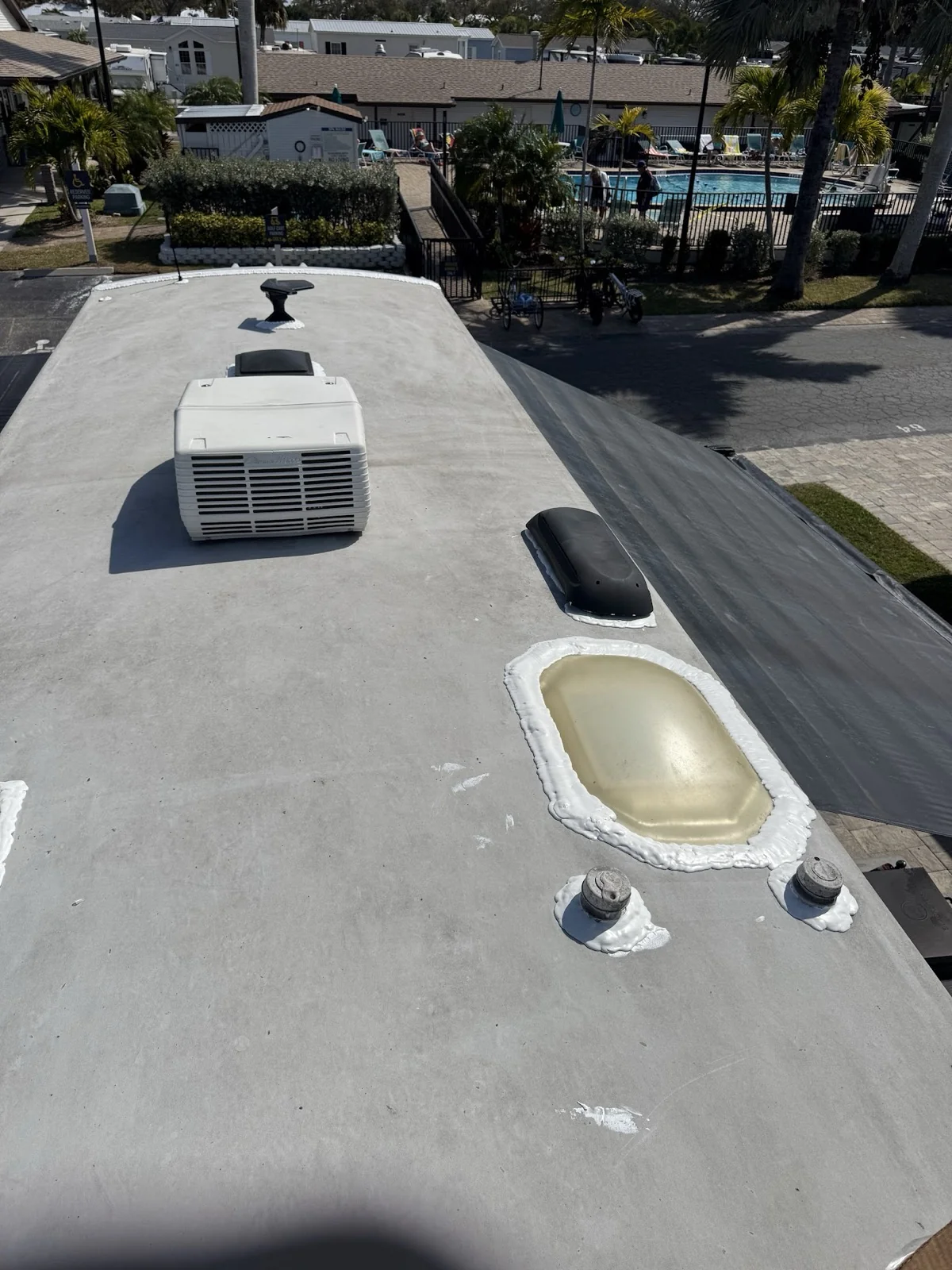
From ground level, look for obvious displaced trim or damage around roof edges. Do not climb onto a roof simply because storage is over. If you see stains, softness, or recurring moisture, review roof reseal and leak repair and describe where the evidence appears. Do not assume the entry point is directly above the stain; water can travel before becoming visible.
Approach batteries and power cautiously
Before connecting shore power, visually inspect accessible cords and plugs for damage, heat marks, or rodent chewing. Do not touch exposed conductors or use a damaged connection. Check the RV manual for its reconnection procedure and the correct power arrangement. Have a qualified person assess equipment that was submerged or shows signs of water entry rather than testing whether it still works.
A battery that no longer holds a charge may have been discharged during storage, deteriorated, or affected by a charging fault. The symptom alone does not tell you which. Never jump, charge, or handle a swollen, leaking, hot, or damaged battery. Keep tools away from battery terminals and arrange RV electrical diagnosis when condition or charging behavior is uncertain.
Bring water systems back deliberately
Follow your RV's instructions for restoring the freshwater system after storage, including any model-specific flushing or sanitation steps. Do not improvise chemical mixtures or assume stored water is suitable for drinking. Locate the water shutoff before supplying water so you can stop a leak quickly. Keep electrical equipment away from any wet area and avoid operating a water heater unless its setup requirements have been met.
With normal access only, watch visible fittings, cabinets, and the area beneath sinks as water service is restored. Stop the supply if you find active leakage. Persistent dampness, unexpected pump cycling, or water appearing beneath the RV warrants investigation. Do not tighten unfamiliar fittings aggressively; damaged plastic or an incorrect connection can turn a small problem into a larger one.
Restart comfort systems without rushing
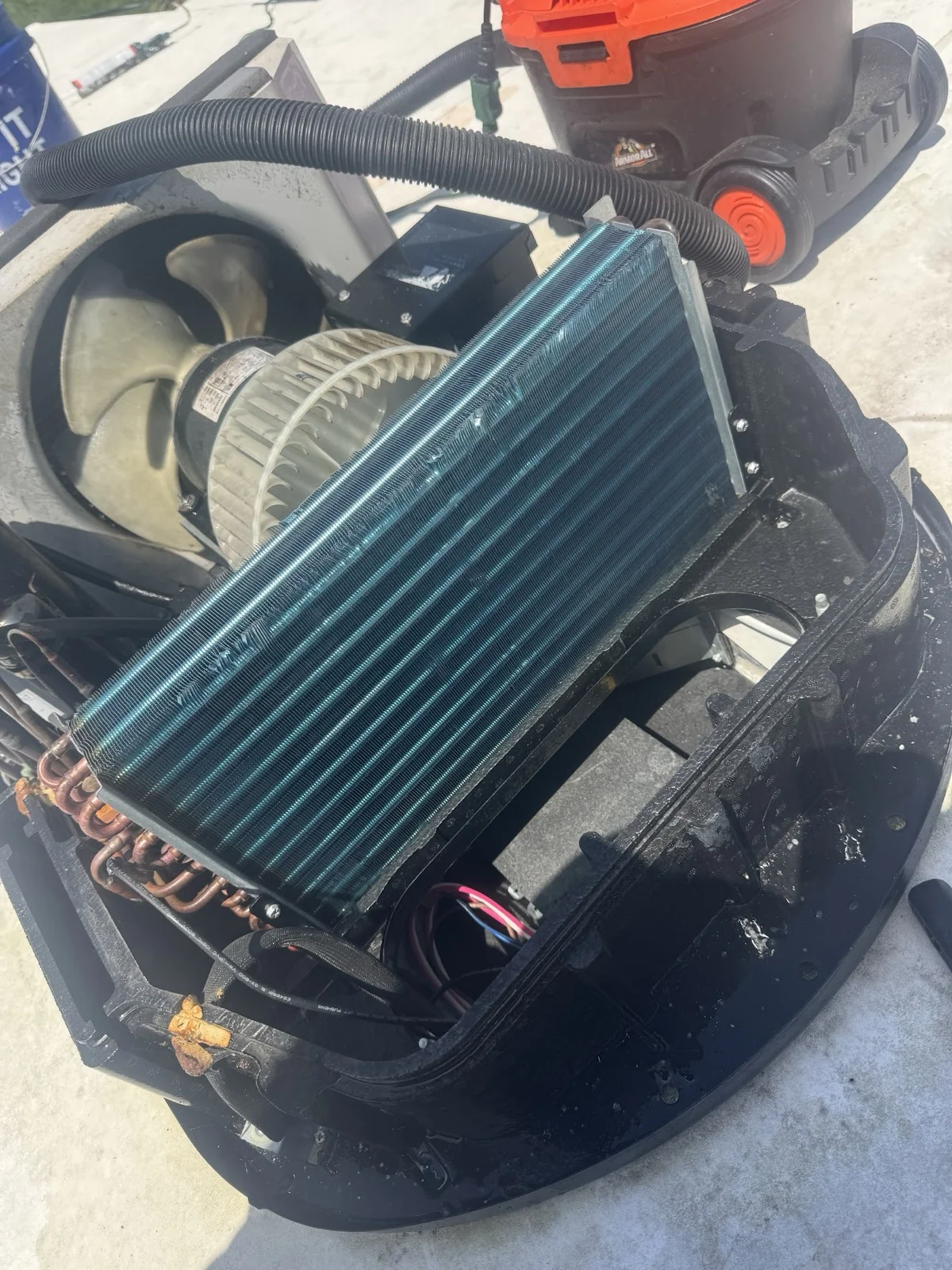
Check owner-serviceable air filters and unobstructed vents before asking the A/C to cool an RV that has been closed for months. Follow equipment instructions and monitor operation rather than leaving immediately. Note unusual smells, noises, poor airflow, or water inside. A hot interior needs time and appropriate operating conditions, but smoke, a burning smell, or a tripping breaker is not a normal warm-up condition.
Before running a generator, use its manual to review storage-return maintenance, fluids, clearances, and operating restrictions. Never run it in an enclosed or partly enclosed location, and keep exhaust away from windows, doors, and nearby RVs. Confirm that carbon monoxide alarms are in service according to their instructions. A generator test should never be used to work around an unresolved electrical or exhaust concern.
Spread functional checks across the week
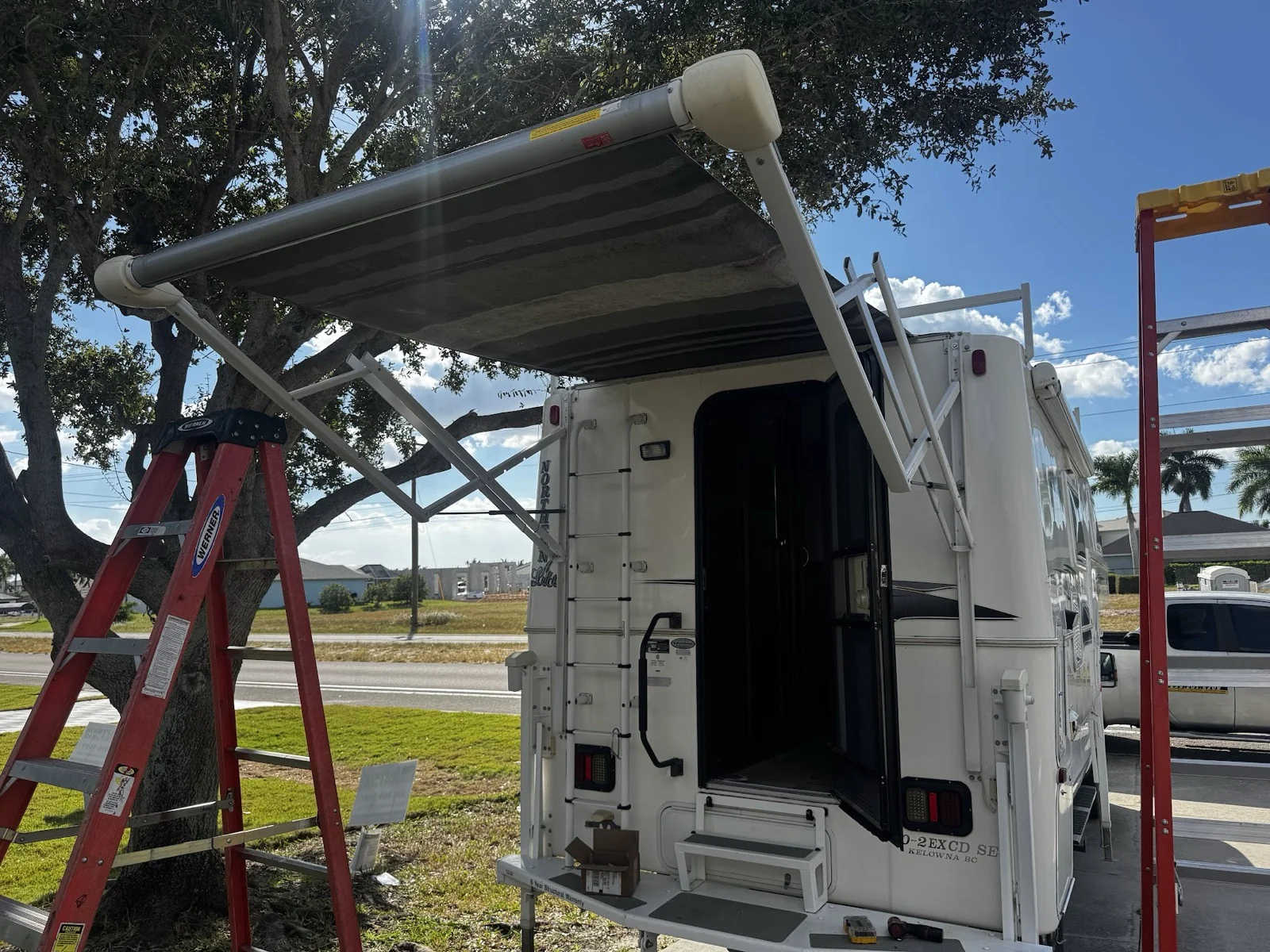
Once the basic safety checks are complete, test individual systems according to their manuals instead of switching everything on together. Watch a slide from a safe position only after confirming clearances and the required setup. Keep hands and pets away from moving parts. For appliances, use the specified startup sequence and stop if you notice gas odors, overheating, or unusual electrical behavior.
Keep a written list that separates urgent issues from routine maintenance questions. Before a trip, also arrange appropriate checks of tires, brakes, towing equipment, and other travel-critical systems; a comfortable interior does not establish road readiness. Leave time for diagnosis rather than discovering a fault on checkout morning. Save photographs, model numbers, and the dates of symptoms so a service conversation starts with clear evidence rather than a broad list of guesses.
Talk through the next step
Geos RV Repair Service is based in Cape Coral, FL. We come to your driveway, campsite, storage lot or RV park. Call (866) 321-8269 or request service to describe your RV, location, and symptoms. Ask about availability, access, and the proposed next steps before making repair or travel plans.
Common questions
Storage loads, battery deterioration, and charging-system problems can all contribute. A battery test and charging assessment may be needed to distinguish them. Do not charge or jump a battery that is swollen, leaking, unusually hot, or visibly damaged; seek qualified help instead.